


Blog Summary
- A discovery call should produce enough information to price the engagement, not just enough to schedule a follow-up.
- Software, volume, and entity type questions matter, but they do not reveal cleanup needs on their own.
- Pairing discovery questions with a quick diagnostic of the actual file closes the gap between what a prospect says and what the books show.
- Standardizing the call with a checklist prevents missed questions during a busy sales week.
- The goal of the call is a defensible quote, not a friendly conversation that ends in a guess.
Introduction
A discovery call is supposed to answer one question: what will this engagement actually take.
Most discovery calls do not answer that question. They cover industry, entity type, current software, and a rough sense of transaction volume, then end with send over access and we will get you a quote. The prospect leaves feeling heard. The firm leaves with almost nothing it can price against.
Across accounting and CAS firms, engagements start on unvalidated books more often than not, which means the discovery call conversation and the real state of the file frequently do not match. The gap does not close itself. It has to be checked.
This checklist covers what to ask, what to verify, and how to turn both into a number the prospect will not push back on later.
Part of our complete guide: accounting client onboarding guide
Why Discovery Calls Miss the Real Scope
Most discovery call frameworks were built for service businesses where the product is fixed and only the terms change. Bookkeeping does not work that way. The same monthly bookkeeping service can mean two hours a month or twenty, depending entirely on the state of the file.
1. Prospects Do Not Know What They Do Not Know
A prospect who says my books are mostly fine is reporting their own confidence, not the condition of the ledger. Owners rarely know if their bank accounts are reconciled, since reconciliation is invisible unless someone checks for it directly.
Taking a confident answer at face value is the single most common reason firms underprice cleanup work.
2. Standard Questions Cover Volume, Not Quality
Transaction count and entity type help with pricing tiers. They say nothing about whether the last six months were coded correctly or whether the previous bookkeeper left mid-year.
3. The Call Happens Before Anyone Opens the File
Most discovery calls happen entirely on trust, before the firm has seen a single transaction. Pricing decisions get made on a conversation, not evidence.
The Core Discovery Call Checklist
Structure the call around four categories. Skipping any one of them leaves a gap in the quote.
CategoryWhat to AskWhy It MattersBusiness basicsEntity type, industry, number of bank and credit accountsSets the baseline scope and complexityCurrent bookkeeping statusWho has been doing the books, and for how longReveals continuity risk and likely gapsSoftware and accessWhich platform, whether access can be granted todayDetermines how fast a diagnostic can runFinancial reporting needsWhat reports the owner actually reviewsClarifies what clean books needs to support
1. Business Basics
Confirm entity type, industry, and account count early. A single-member LLC with one bank account is a different engagement than a multi-entity business with fifteen accounts across two states.
2. Current Bookkeeping Status
Ask directly who has done the books for the last twelve months, and whether that changed partway through the year. A mid-year switch between bookkeepers is one of the strongest predictors of coding inconsistency.
3. Software and Access
Confirm the platform and ask for read-only access on the call, not after. The sooner access is granted, the sooner a diagnostic can run before the quote goes out.
4. Financial Reporting Needs
Ask what reports the owner actually looks at, and how often. A business that only cares about a rough P&L for tax season has different accuracy requirements than one making pricing decisions off weekly cash flow reports.
Questions That Reveal Hidden Cleanup Work
Beyond the basics, a handful of pointed questions surface risk that generic discovery scripts miss entirely.
- When was the last time your bank accounts were reconciled? Most owners will not know the answer, which is itself useful information.
- Has anyone told you your books need cleanup before? A yes here means the prospect already suspects a problem and is more receptive to an itemized quote.
- Did your last bookkeeper close out cleanly, or did the relationship end abruptly? Abrupt endings correlate strongly with incomplete final months.
- Are there any accounts, loans, or credit cards you are not sure are reflected correctly? This question alone often surfaces the single biggest cleanup item in the file.
Steps to Verify What the Prospect Told You
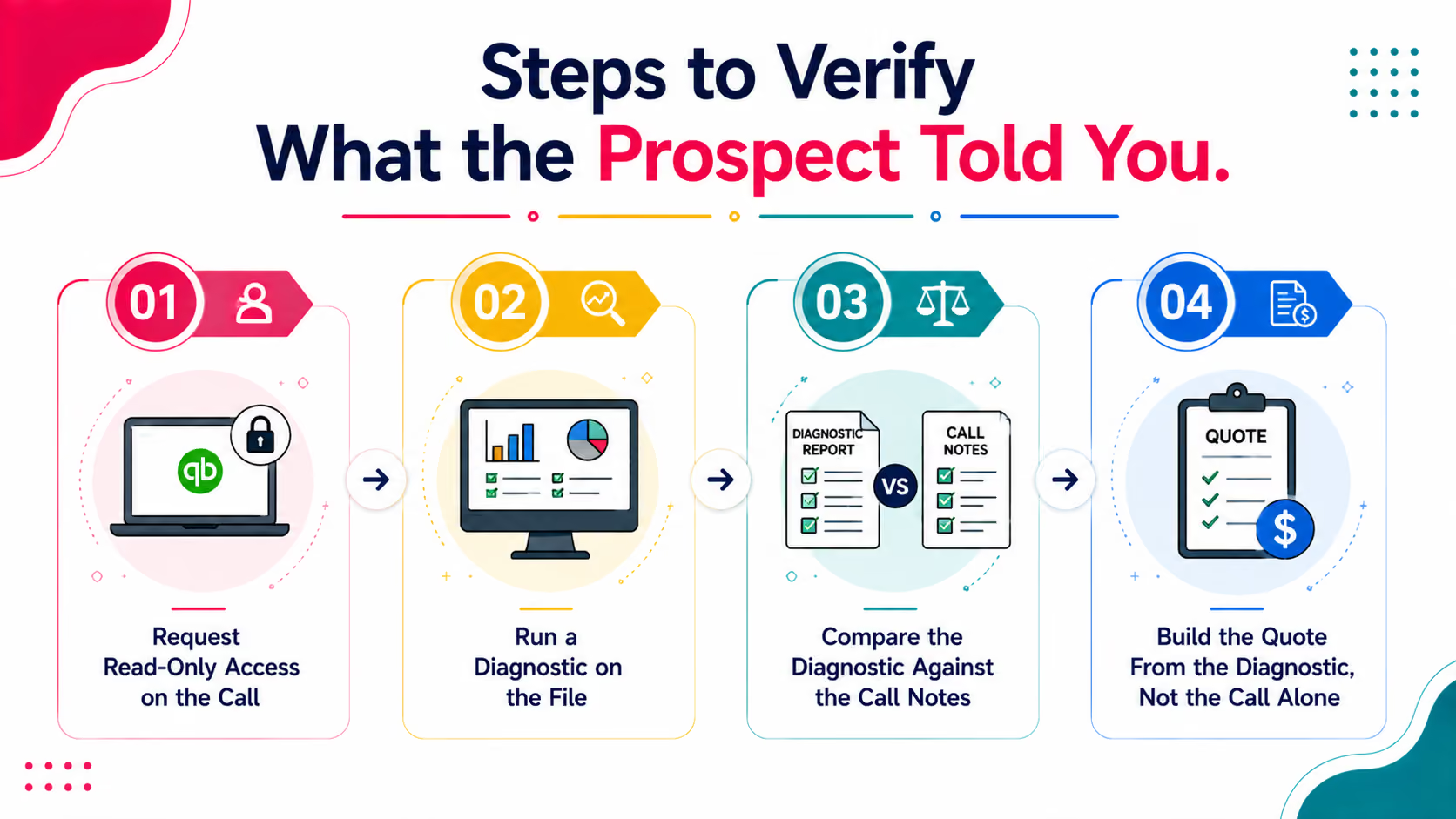
A checklist of questions only helps if the answers get checked against the actual file. These four steps close that loop.
Step 1: Request Read-Only Access on the Call
Ask for access before the call ends, not in a follow-up email that may sit unanswered for days.
Step 2: Run a Diagnostic on the File
Connect the file to a diagnostic tool and let it scan reconciliation status, coding accuracy, and anomalies. With Xenett Pulse, this takes under two minutes.
Step 3: Compare the Diagnostic Against the Call Notes
Note where the prospect's answers matched the findings and where they did not. Mismatches are not a red flag on the client, they are useful information for the proposal.
Step 4: Build the Quote From the Diagnostic, Not the Call Alone
Use the verified findings, not the conversation, as the foundation for pricing. The call sets context. The diagnostic sets the number.
Discovery Call vs. Discovery Call Plus Diagnostic
Discovery Call AloneDiscovery Call Plus DiagnosticBasis for pricingProspect's own account of their booksVerified findings from the actual fileTime to quoteSame day, based on conversationSame day, with two extra minutes for the diagnosticRisk of scope creepHigh, since assumptions go uncheckedLow, since findings are confirmed before pricingClient trust in the quoteRelies on the firm's wordBacked by a report the client can see
Try Xenett Pulse Free. Add a two-minute diagnostic to every discovery call. Free for the first 100 firms, no credit card required.
Turning Discovery Into a Quote
Once the checklist is complete and the diagnostic has run, pricing stops being a guess.
1. Separate What You Heard From What You Found
Note where the prospect's answers matched the diagnostic and where they did not. A mismatch is not a red flag on the client. It is useful data for the proposal conversation.
2. Quote the Cleanup Separately From the Ongoing Work
Bundling cleanup into the first month of a retainer hides the real cost and sets an expectation that heavy lifting is normal every month. Price it as its own line item.
3. Use the Diagnostic as Evidence, Not Just an Internal Check
A branded report showing exactly what the discovery call and diagnostic uncovered gives the prospect a reason to accept a higher number, rather than a firm simply asserting the books need work. For the full diagnostic process behind this, see our QuickBooks diagnostic guide.
Frequently Asked Questions
What is a bookkeeping discovery call?
A bookkeeping discovery call is the initial conversation between a firm and a prospective client used to gather the information needed to scope and price the engagement.
What questions should I ask on a bookkeeping discovery call?
Cover entity type, account count, who has managed the books and for how long, current software, reconciliation status, and what financial reports the owner actually reviews.
Why do discovery calls often lead to inaccurate quotes?
Discovery calls rely on the prospect's own understanding of their books, which is frequently inaccurate. Reconciliation gaps and coding issues are usually invisible to the business owner.
Should I ask for QuickBooks access during the discovery call?
Yes. Requesting read-only access during the call, rather than after, lets you run a diagnostic before finalizing the quote instead of pricing on assumptions.
How is a discovery call different from a diagnostic?
A discovery call gathers information through conversation. A diagnostic verifies that information against the actual QuickBooks file, surfacing issues the prospect may not know about.
Conclusion
A discovery call that ends with send access and we will send a quote is a conversation, not a scoping process. Pairing a structured checklist with a real look at the file turns discovery into the foundation of an accurate quote, not a guess dressed up as one.
Related guides
- Start here: Accounting Client Onboarding Checklist
- Run a QuickBooks Diagnostic Before You Price — Why to run a QuickBooks diagnostic before you quote a price.
- QuickBooks Audit Trail for Pre-Proposal Review — Using the QuickBooks audit trail for a pre-proposal review.
- Why Client Books Fail Review Before You Quote — The review failures that show up after the fee is already set.
The firms that skip this step are the ones renegotiating scope three weeks into an engagement. Try Xenett Pulse and add a verified diagnostic to every discovery call before your next quote goes out.